
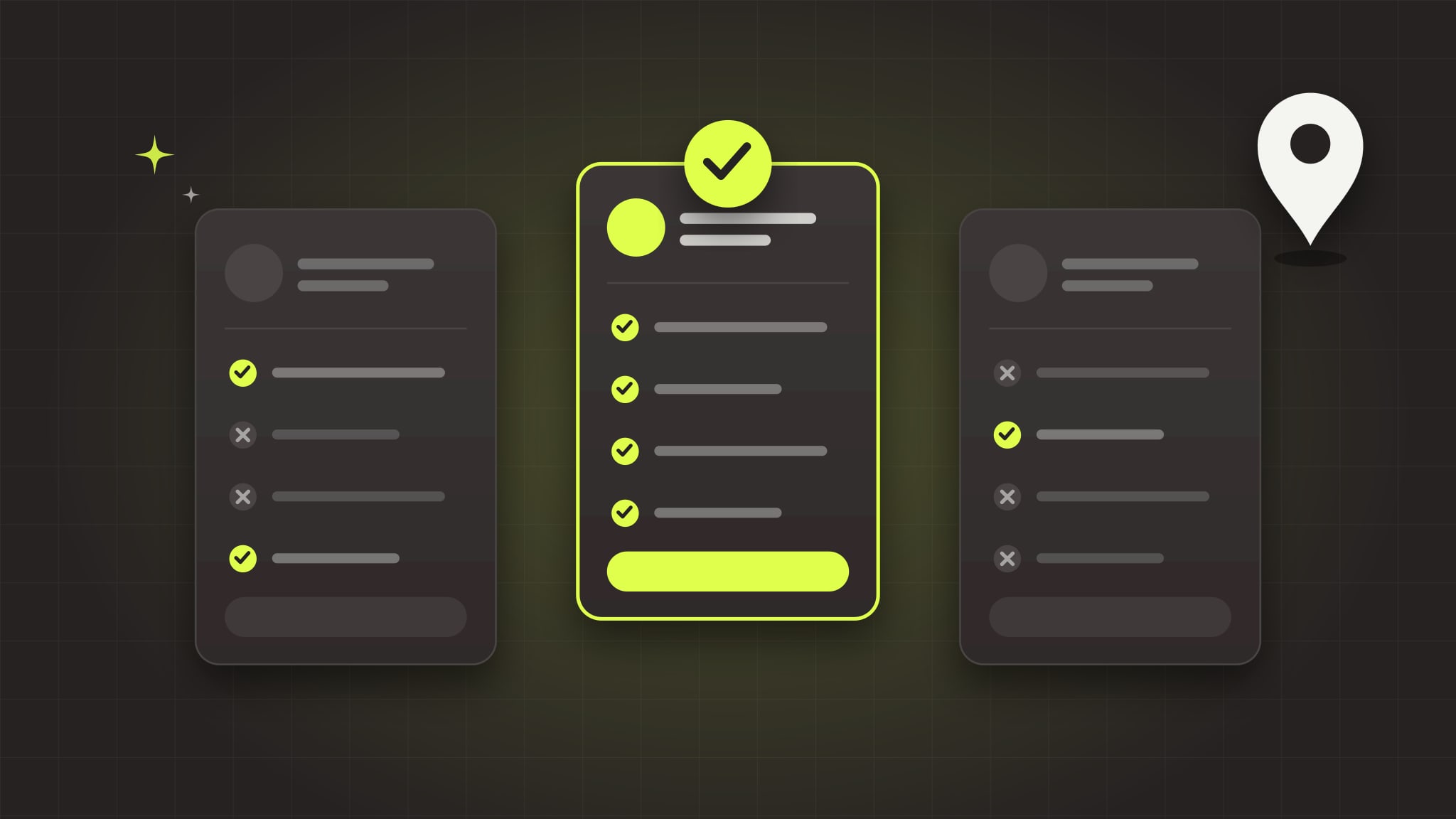
To choose a web development company in Kansas City, talk to two or three, ask each one the same 10 questions, and compare the answers side by side. The right partner gives you clear, written answers about who owns the site, what's included in the price, how they'll protect your search rankings and what happens after launch. Vague answers to any of those are the warning sign, whatever the price.
Most businesses hire a developer once every few years, so it's hard to know what to ask. Here's the list we'd use if we were on your side of the table.
Before you call anyone: know what you're buying
A clear brief gets you better quotes. Write down, in plain language:
- What the site has to do. Bring in leads, sell products, take bookings, let customers log in, or replace a manual process.
- What it has to connect to. Your CRM, scheduling tool, accounting software, inventory or payment provider.
- Who will update it, and how often.
- Your rough budget and deadline. If you don't know what's realistic, our guide to what a website costs in Kansas City has current ranges.
You don't need a technical spec. A one-page brief is enough for a good developer to ask the right follow-up questions.
The 10 questions to ask
1. Can I see work like mine, and talk to the client?
Look for projects close to yours in type, not just in looks: an ecommerce store if you sell online, a portal if you need customer logins, integrations if you need systems talking to each other. A portfolio full of pretty brochure sites says little about whether they can build a store with 2,000 products or connect your billing system.
Ask for a reference you can call. Keep in mind that a lot of good work can't be shown publicly; much of ours is under NDA. A company that can describe similar work in detail and put you in touch with a past client is giving you what you need.
2. Who will actually build it?
Some agencies sell the project and pass the work to subcontractors or offshore teams you'll never meet. That isn't automatically bad, but you should know. Ask who writes the code, who your day-to-day contact is, and whether that person stays with you after launch.
3. Will I own the code, the domain and every account?
This is the most important question on the list. The domain, hosting, site files, analytics, Google Business Profile and any software subscriptions should be in your name, or transferable to you at any time. You should be able to leave without starting over.
Be careful with proprietary site builders or "website as a service" deals where the site can't move with you. They can make sense for some businesses, but you need to know before you sign.
4. Is the price fixed, capped or hourly, and what's not included?
Any of the three can work. What matters is that you know which one you're getting and what's outside it. Ask for a written estimate that lists:
- the pages, features and integrations included
- who supplies copy and images
- how many rounds of revisions are included
- what triggers extra cost, and how much
If one quote is far lower than the rest, line the scopes up. The difference is usually something the cheap quote left out.
5. How will you protect our Google rankings?
If you have an existing site, a redesign can wipe out years of search traffic if old URLs disappear. Ask how they'll handle:
- Redirects from every old URL that gets traffic or links to its new home
- Page titles and meta descriptions carried over or improved
- Site speed and mobile performance
- Structured data such as local business details
- Checking Search Console after launch to catch errors early
A confident, specific answer here is a strong sign of experience. "We'll set up the SEO plugin" is not an answer.
6. What platform do you recommend, and why?
WordPress, WooCommerce, Shopify, Laravel, Next.js and others all have good uses. A good company recommends a platform based on your needs (who edits the site, what it connects to, how much custom functionality you need) and can explain the trade-offs in plain English. Be wary of a team that recommends the same tool for every project, or a fully custom build for a simple marketing site.
7. How will it connect to the tools we already use?
Integrations are where a website stops being a brochure and starts saving your team time. Ask which systems they've connected before and what happens when one of them changes or goes down.
For example, for APA Medical we brought their customer-facing processes onto one modern platform connected to HubSpot and their billing system. For SpecChem, we built both the WooCommerce store and their iOS and Android app. The question to ask is "have you done this before, and what went wrong?"
8. What happens after launch?
Every site needs updates, backups, security monitoring and small changes. Ask:
- What's included in the first weeks after launch?
- Do you offer an ongoing maintenance or care plan, and what does it cover?
- How fast do you respond if the site goes down?
- What does a small change cost if we're not on a plan?
A site nobody maintains is the one that gets hacked. A clear support plan, like our care plans, matters as much as the build.
9. How do you handle security and accessibility?
At a minimum: SSL, regular updates, backups stored off the server, strong admin logins, and forms protected against spam. If you collect customer data or take payments, ask how that data is stored and who can see it.
Accessibility matters too. Ask whether they design to WCAG guidelines, so the site works with screen readers and keyboard navigation. It's the right thing to do, and it reduces legal risk.
10. How will we work together, and what do you need from us?
Ask how often you'll get updates, how you'll review work in progress, and who approves each stage. Also ask what they need from you: content, photos, logins, decisions. Projects usually run late because of waiting, not building. A company that's clear about your part of the work is one that's done this many times.
Red flags that should end the conversation
- They won't put the domain, hosting or code in your name.
- The quote is a single number with no list of what's included.
- They can't show or describe any work similar to yours.
- They promise "page one on Google" or guaranteed rankings.
- They push for a long contract before you've seen a proposal.
- They can't explain their recommendation without jargon.
- Nobody can tell you who will actually build the site.
Local or remote?
You can hire a good developer anywhere. Working with a Kansas City company has a few practical advantages: meetings in person when it helps, the same time zone, and a team that knows the local market, whether your customers are in the Northland, Overland Park or Lee's Summit. Whoever you hire, the 10 questions above matter more than the address.
A simple way to compare your options
Put each company's answers in a table: one row per question, one column per company. Mark anything vague or missing. The decision usually becomes clear, and it's often not the cheapest or the flashiest option. It's the one whose answers you understood.
How we'd answer these
Prodjex has built websites, ecommerce stores, mobile apps and custom software since 2017, more than 610 projects, from our office in Liberty, Missouri. We give written fixed or capped estimates, the site, code and accounts are always yours, and you'll know exactly who is working on your project.
See our web development services, or tell us about your project and we'll answer all 10 questions for it.